
Carrier operations
Box Truck Freight: Matching Loads to Your Equipment
Check whether box truck freight fits your vehicle by confirming dimensions, payload, handling, access and delivery requirements before booking.
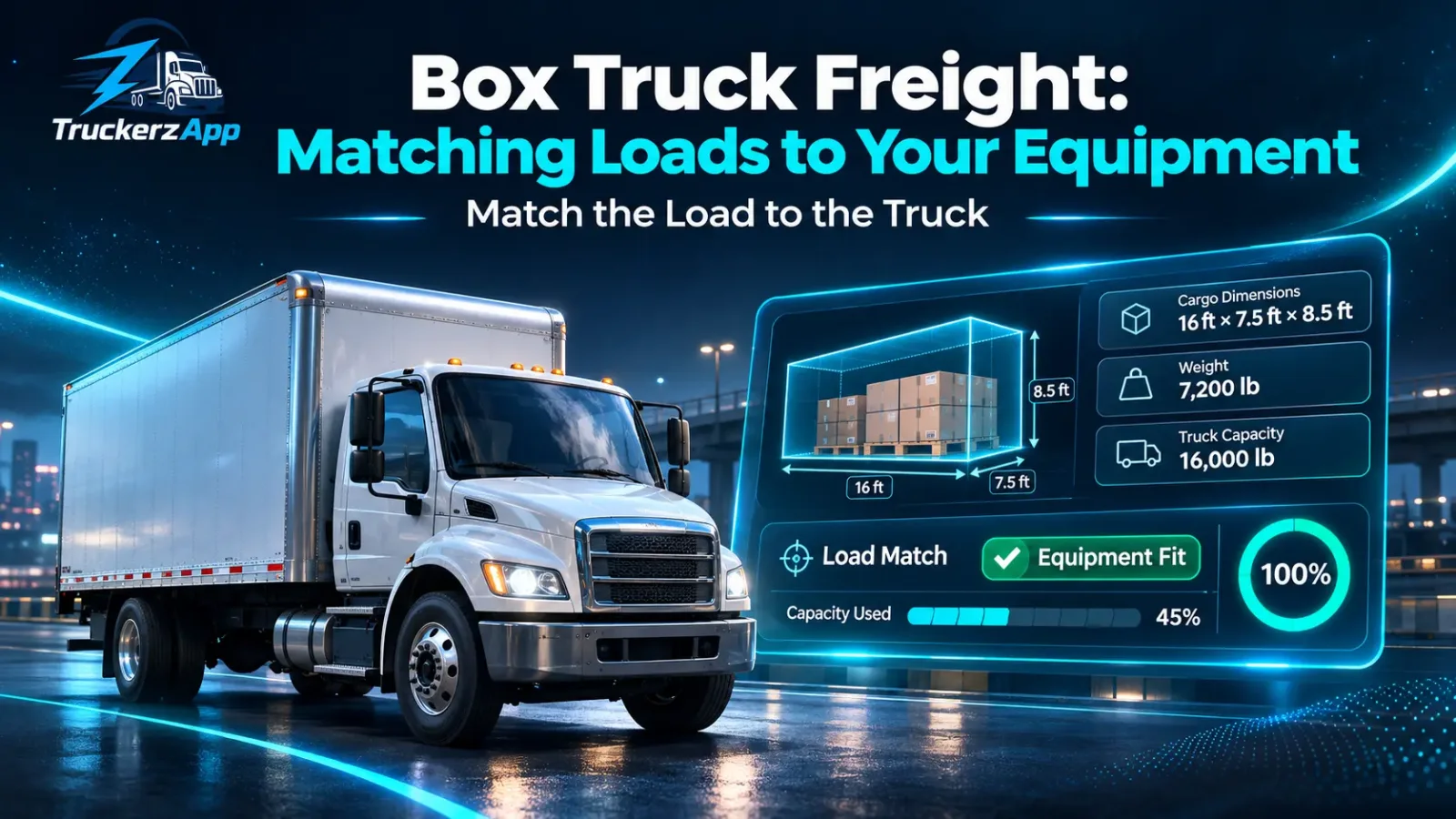
A shipment can fit inside a box truck and still be unsuitable for that truck. The rear-door opening may be too small, the liftgate may not support the handling operation or the receiver may require equipment the driver does not carry.
Matching box truck freight to equipment means checking the complete loading, transport and unloading process.
Start with verified vehicle information
Maintain an equipment profile based on the actual vehicle. Include usable interior space, door opening, payload constraints and installed loading equipment.
Do not use the truck's advertised length as a substitute for measurements. Interior obstructions and door clearances can reduce usable space.
If a vehicle is modified or fitted with additional equipment, revisit the profile so dispatch is not quoting from outdated information.
Request complete shipment measurements
Ask for the number of pieces and the dimensions and weight of each unit, including packaging or pallets. Confirm whether the freight can be stacked and whether a particular orientation is required.
“Six pallets” is not a complete description. Pallets can vary in size, height and weight, and the loading pattern matters.
If dimensions are uncertain, resolve that uncertainty before promising capacity. Discovering a mismatch at pickup can waste the driver's time and affect the customer.
Confirm the loading and unloading method
Ask whether each facility has a compatible dock and handling equipment. If a liftgate is required, verify the complete operation, including the freight's size and the relevant equipment ratings.
Clarify driver-assist duties, inside delivery, stairs and any requirement to remove packaging. These are service details, not minor notes to discover after booking.
Do not accept a handling arrangement the driver cannot perform safely.
Consider protection and securement
Check whether the commodity requires particular protection, separation or securement. A closed box does not remove the need to prevent cargo movement.
FMCSA's cargo securement overview explains the general purpose and scope of federal requirements. The appropriate method depends on the actual freight and vehicle; this article is not a securement plan.
If the shipment's handling instructions are unclear, request clarification from the responsible party.
Match the service to the schedule
A physically suitable load may still fail operationally if its appointments conflict with another commitment. Include loading time, unloading time and the truck's next planned movement.
Give the driver the same requirements used when approving the booking.
Explore TruckerzApp's fleet workflow to keep truck information and preferences organized. Better equipment records help your team ask the right questions before accepting freight, rather than trying to solve a mismatch at the loading dock.