
Carrier operations
Box Truck Load Capacity: What to Check Before Booking Freight
Understand box truck capacity by checking vehicle ratings, operating weight, axle and component limits, usable space and the shipment's dimensions.
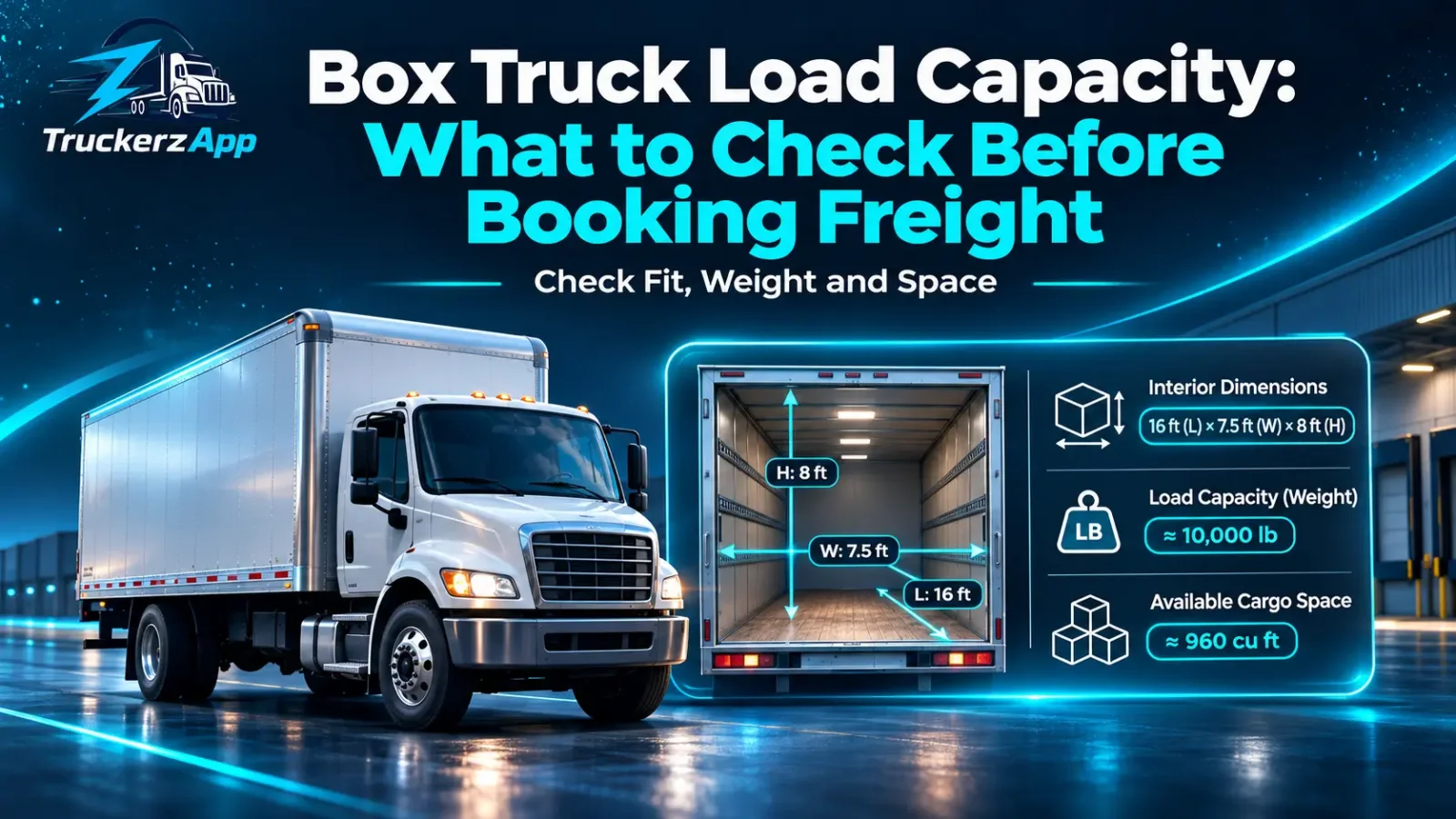
Box truck load capacity has two separate parts: how much freight can fit and how much weight the vehicle can carry within its applicable limits. Passing one check does not mean the shipment passes the other.
A 26ft body length does not establish a universal payload. Chassis, body, installed equipment and the truck's operating configuration all matter.
Read the ratings for the actual vehicle
Use the vehicle's certification information and the relevant manufacturer or body-builder documentation. Gross vehicle weight rating describes a maximum loaded vehicle rating, not cargo weight alone.
Ford's vehicle glossary explains the general relationship between gross vehicle weight rating, curb weight and payload. For a particular box truck, verify its own completed-vehicle specifications rather than borrowing a number from another model.
Account for equipment added after manufacture.
Establish the ready-to-work weight
The operating vehicle includes more than an empty cargo box. Fuel, people, tools, installed equipment and other carried items use part of the available capacity.
A properly obtained scale weight can help establish the actual operating condition. Compare it with the applicable vehicle and component ratings using qualified guidance.
Do not rely on a brochure payload if the real truck's configuration differs from the specification used in that brochure.
Check distribution and component limits
Even when total weight appears acceptable, axle loading, tires, wheels and other components can create separate limits. Freight placement affects how the weight is distributed.
Loading equipment has its own ratings. A liftgate's suitability for an operation cannot be inferred from the truck's overall payload.
Review the actual handling plan and applicable road or bridge restrictions before accepting the trip. Resolve uncertainty with the manufacturer, a qualified specialist or the responsible authority.
Measure usable space and access
Confirm interior length, width, height and door clearance. Include pallets and packaging in shipment measurements.
Ask whether freight can be stacked, rotated or placed alongside other items. Do not assume permission because a different arrangement would make it fit.
FMCSA's cargo securement guidance also makes clear that cargo movement must be addressed for applicable operations. Available floor space is not a securement assessment.
Make dispatch use verified information
Create a truck profile containing measurements, known limitations and the date the information was checked. Review it after equipment changes.
If the offered shipment is close to a limit, obtain precise information before booking. “Approximately” may not be good enough for a safe decision.
Explore TruckerzApp's fleet-management workflow to organize truck information and preferences. The system can help your team find the records; the capacity decision still needs to be based on the actual vehicle and shipment.