
Fleet operations
Box Truck Logistics: Coordinating Multiple Trucks and Drivers
Coordinate a box truck fleet with clear truck availability, assignment ownership, driver handoffs and exception reviews across the operation.
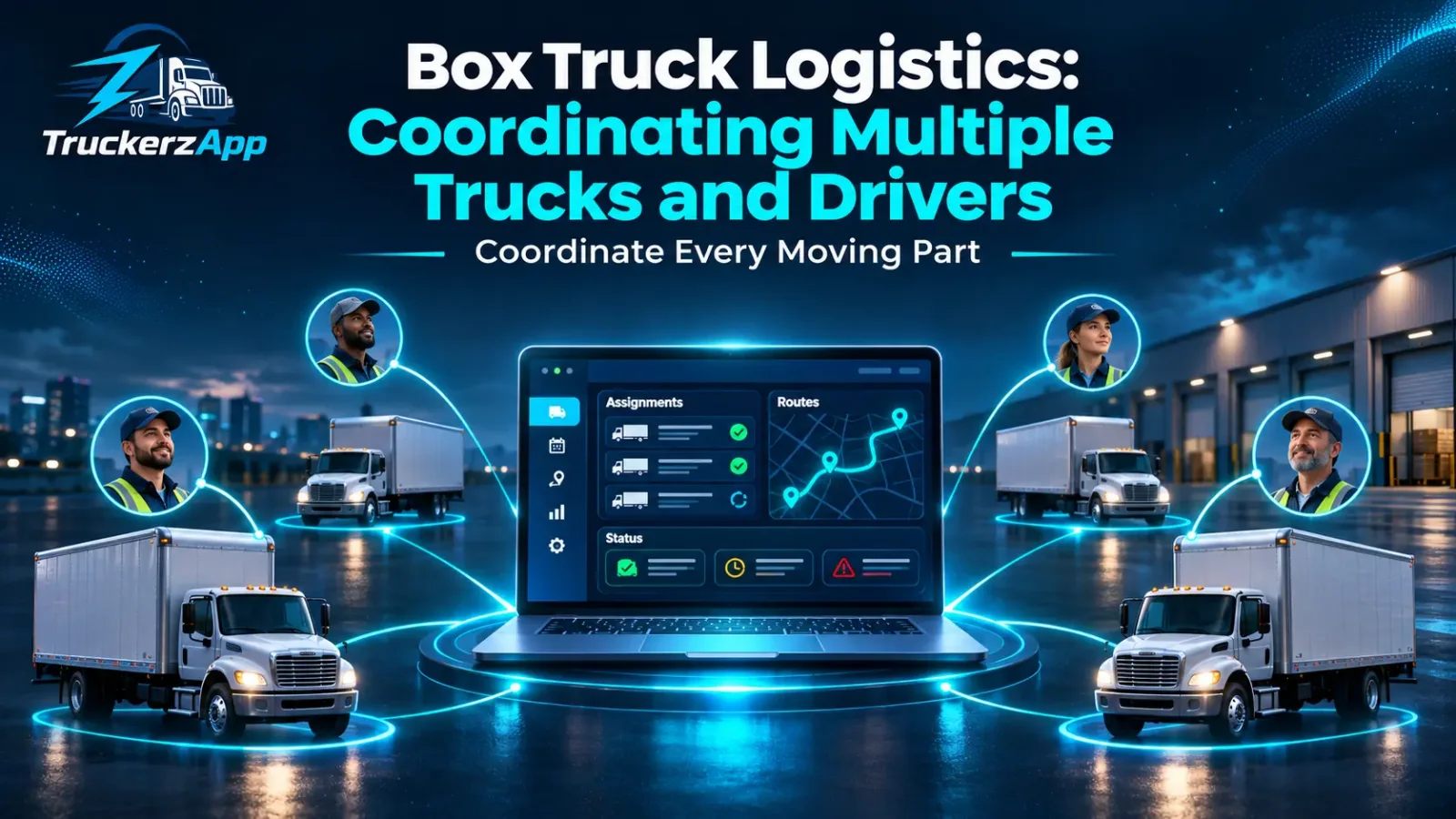
Box truck logistics becomes a different management problem when several vehicles are moving at once. The owner can no longer rely on remembering every appointment and conversation.
The main challenge is coordination: making sure each truck has a workable assignment, each driver has current instructions and each exception has someone responsible for it.
Create a shared availability view
For each truck, record the assigned driver, current commitment, expected empty location and ready time. Include equipment limitations that affect what it can accept next.
Use consistent identifiers. Vehicle numbers or agreed names reduce confusion when dispatchers discuss similar trucks.
Separate confirmed availability from a forecast. A dispatcher should not have to guess whether a ready time came from the driver or from yesterday's plan.
Define who can make an assignment
Two people searching for freight can accidentally commit the same truck if approval rules are unclear.
Assign responsibility for final booking approval. Before accepting, check the shared record and confirm that no conflicting commitment has been made.
For example, in a hypothetical five-truck fleet, one dispatcher may search for two vehicles while another handles three. That division is useful only if changes and cross-coverage are visible to both.
Standardize the driver handoff
Use a repeatable handoff containing the load reference, current addresses, appointments, contacts and important handling instructions.
Confirm acknowledgment of material changes. Avoid forwarding an entire conversation and expecting the driver to identify the final instruction.
If a truck or driver is replaced, recheck the load's requirements and communicate the change through the appropriate approval process.
Run an exception review
At agreed intervals, review only the loads needing attention: a late pickup, an unclear delivery appointment, an equipment issue or missing paperwork.
Give each issue an owner, a next action and a time for another update. This keeps the review focused and prevents the same unresolved problem from being mentioned repeatedly without action.
The purpose is to coordinate decisions, not to create more status meetings.
Close the administrative loop by truck
Check which loads are delivered, which documents are complete and which records still need follow-up. Keep operational completion distinct from billing readiness.
Review recurring issues across the fleet. If several drivers submit unreadable documents, improve the instructions or process instead of treating each case as an isolated mistake.
Explore the TruckerzApp TMS for a connected fleet workflow. Start with clear responsibilities and consistent records, then use the system to help the team coordinate as the number of trucks grows.