
Fleet operations
How Box Truck Owner-Operators Can Organize Daily Operations
Create a daily routine for box truck operations covering availability, bookings, driver updates, document checks and the next day's plan.
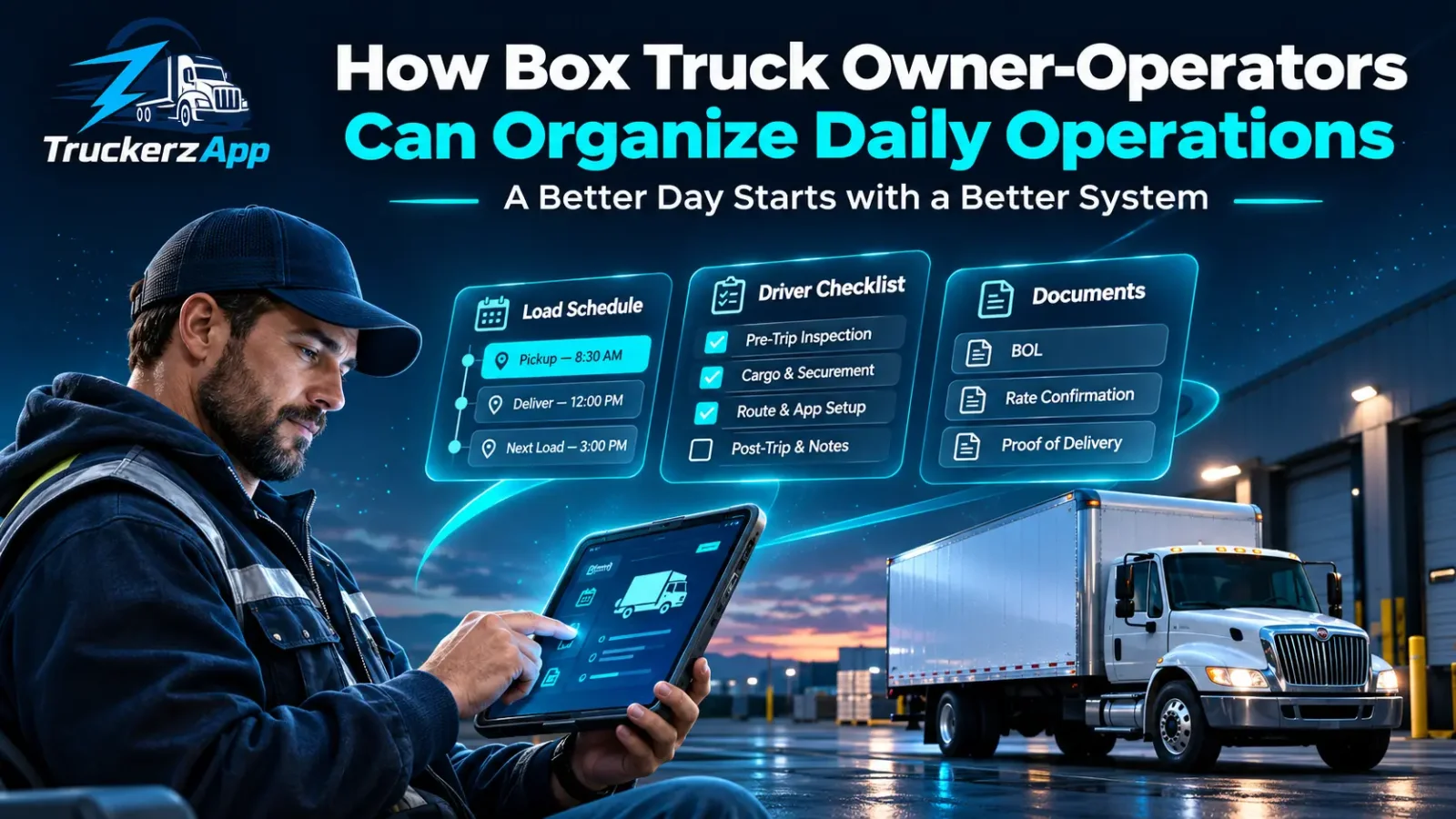
A box truck owner-operator may handle driving, customer communication, dispatch decisions and paperwork in the same day. The challenge is not simply doing more tasks. It is making sure the next important task does not disappear while attention is elsewhere.
A short operating routine can make the work easier to control. It should fit the actual business, whether the owner drives the truck or coordinates hired drivers.
Begin with a realistic availability check
Before looking for the next load, confirm the current location, readiness of the equipment, expected completion of any existing trip and the driver's actual availability.
Make unresolved issues visible. A mechanical concern, missing document or uncertain appointment should not be hidden behind a general “available” label.
For several trucks, repeat the check individually. A fleet is not available as one unit; each vehicle has its own commitments.
Keep a short list of today's decisions
Separate decisions from reminders. “Choose between two load offers by 10:00” requires action. “Broker emailed yesterday” is background information.
Give each decision an owner and a time. If someone else helps with dispatch, agree who can accept a load, negotiate a change or approve additional expense.
This prevents work from being duplicated and avoids the assumption that another person has already handled it.
Set a safe communication routine
Drivers should not need to answer routine messages while moving. Agree on the updates that will be provided when safely parked and establish a method for reporting urgent problems.
Keep messages specific. Include the load reference, the issue, the requested action and when an answer is needed. This is easier to use than a long conversation mixing several trips.
If an appointment changes, confirm that the driver has received the current instruction.
Review paperwork before it becomes a billing problem
Check the rate confirmation and pickup paperwork against the load details. After delivery, review the POD rather than simply counting the upload as complete.
A missing signature or unreadable page is easier to address promptly. Keep receipts and approved changes with the same trip record.
Trucking document management should support this routine, but the responsibility to review the information still belongs to a person.
End with tomorrow's starting position
Before closing the day, note where the truck is expected to finish, when it can next load and what remains unresolved. Review whether anyone is waiting for a response from your team.
Do not leave tomorrow's availability buried in today's messages.
Explore the TruckerzApp TMS as a shared place for fleet information and paperwork. Start with a simple daily routine, then use the system to help everyone follow the same process.